
Key Points
- Tree root intrusion is one of the most common causes of sewer line failure in Spring, TX
- Slow drains and persistent odors are early warning signs of a deeper sewer line problem
- Camera inspections allow our team to diagnose the exact problem before any digging starts
- Hydro-jetting clears root intrusion and buildup without unnecessary excavation
- Catching sewer line issues early prevents full line replacement and saves significant money
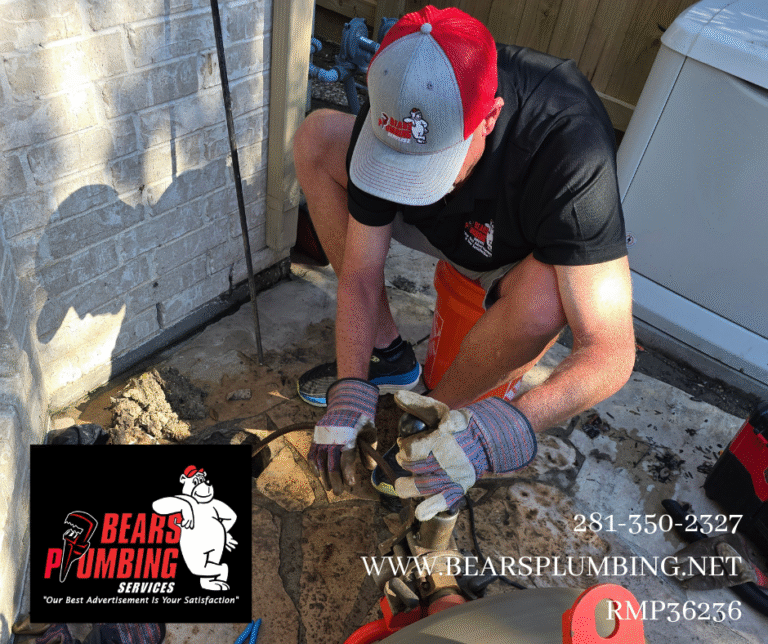
When a homeowner off Cypresswood Drive in Spring called Bear’s Plumbing on a Tuesday morning, he wasn’t panicking yet. His drains had been running slow for about three weeks, and there was an odor coming from the floor drain in his utility room that he couldn’t shake. He figured it was probably a clog. What our technician found was something much more involved.
This is the kind of call that reminds us why thorough diagnostics matter more than quick fixes. In our service calls throughout the Spring-Klein area, we’ve learned that what looks like a simple clog at the surface is often a sign of a larger problem developing underground.
What the Homeowner Noticed First
The homeowner had two obvious symptoms: slow drainage across multiple fixtures and a sour, persistent odor near the utility room. He had already tried a store-bought drain treatment with no improvement. When multiple drains in a home slow down at the same time, that pattern points away from an isolated fixture clog and toward a problem in the main sewer line.
Our technician arrived, walked through the home, and confirmed the pattern. Every drain on the first floor was sluggish. The toilet was gurgling slightly when the washing machine drained. These are classic indicators of a partial blockage or restriction somewhere in the main line running out to the street. A sewer line inspection was the logical next step before any further work was done.
What the Camera Found Underground
Running a camera through the sewer line told the full story within minutes. Approximately 40 feet from the cleanout, our technician identified a significant root mass that had worked its way through a joint in the older clay pipe. The roots had been growing inside the line long enough to collect debris and create a partial dam that was restricting flow to about 30 percent of the pipe’s original capacity.
This property sits near a stretch of mature oak trees common to neighborhoods in the Spring Creek corridor, and root intrusion is something we see regularly in homes built in the 1980s and early 1990s throughout this part of Harris County. The clay pipe joints on those older lines develop hairline cracks over time, and tree roots follow moisture directly into those openings. Left unaddressed, what starts as a partial restriction becomes a complete blockage or a collapsed section.
How Bear’s Handled It
With a clear picture of what was happening underground, our technician recommended hydro-jetting to clear the root mass and flush the line before any structural repairs were assessed. High-pressure water jetting is one of the most effective tools available for root intrusion because it doesn’t just push the obstruction further down the line. It cuts through the root mass, scours the pipe walls clean, and flushes everything out completely.
The process took just under two hours. After the line was cleared, our tech ran the camera through a second time to assess the condition of the pipe walls and joints. The joint where the roots had entered showed wear but remained structurally sound. No collapse, no offset, no immediate need for excavation. The homeowner was looking at a sewer line repair timeline of monitoring and preventive maintenance rather than emergency replacement.
What This Job Illustrates About Sewer Line Problems
- Multiple slow drains at once always warrant a camera inspection, not just a snaking attempt
- Root intrusion is gradual, which means symptoms often appear mild long before the situation becomes critical
- Hydro-jetting is more effective than mechanical snaking for root and grease buildup in older clay lines
- Early diagnosis saves money — catching this at the restriction stage cost a fraction of what a collapsed line repair would have
Based on what we see in Spring and Klein-area properties, homeowners with mature trees and homes built before 1995 are at the highest risk for this type of issue. Scheduling a camera inspection every few years is one of the most practical steps those homeowners can take.
Keeping Your Sewer Line Healthy Long-Term
After clearing the line, our technician walked the homeowner through a straightforward maintenance plan. Annual or biannual drain cleaning keeps buildup from accumulating between inspections and reduces the conditions that make root intrusion worse. It also gives our team a regular opportunity to monitor the condition of the pipe at that joint and flag any changes before they become emergencies.
According to the Environmental Protection Agency, aging sewer infrastructure is one of the leading contributors to residential plumbing failures across the country, and proactive maintenance is consistently identified as the most cost-effective approach for homeowners. For Spring-area residents dealing with older lines, that guidance is especially relevant. If you’ve noticed slow drains, gurgling fixtures, or unexplained odors in your home, don’t wait for the situation to escalate. Contact our team today to schedule a sewer line inspection and find out exactly what’s happening in your pipes.
Frequently Asked Questions
How do I know if my sewer line has root intrusion?
The most common signs are slow drains across multiple fixtures, gurgling sounds from toilets, and recurring odors near floor drains. A camera inspection confirms the diagnosis.
Is hydro-jetting safe for older clay pipes?
Yes, when performed by a trained technician at the appropriate pressure setting. Our team assesses pipe condition before recommending hydro-jetting to ensure it’s the right approach.
How long does a sewer line camera inspection take?
Most inspections take between 45 minutes and an hour, depending on the length and layout of the line. You receive a clear diagnosis before any repair work is recommended.
Can tree roots grow back after hydro-jetting?
Root intrusion can recur if the pipe joint remains open. Our team monitors the affected area and can recommend longer-term solutions, including targeted repair, if regrowth becomes an ongoing issue.
Does Bear’s Plumbing serve the entire Spring-Klein area?
Yes. We serve Spring, Klein, and surrounding communities throughout Harris County, including neighborhoods near Cypresswood Drive, Spring Creek, FM 2920, and Kuykendahl Road.