
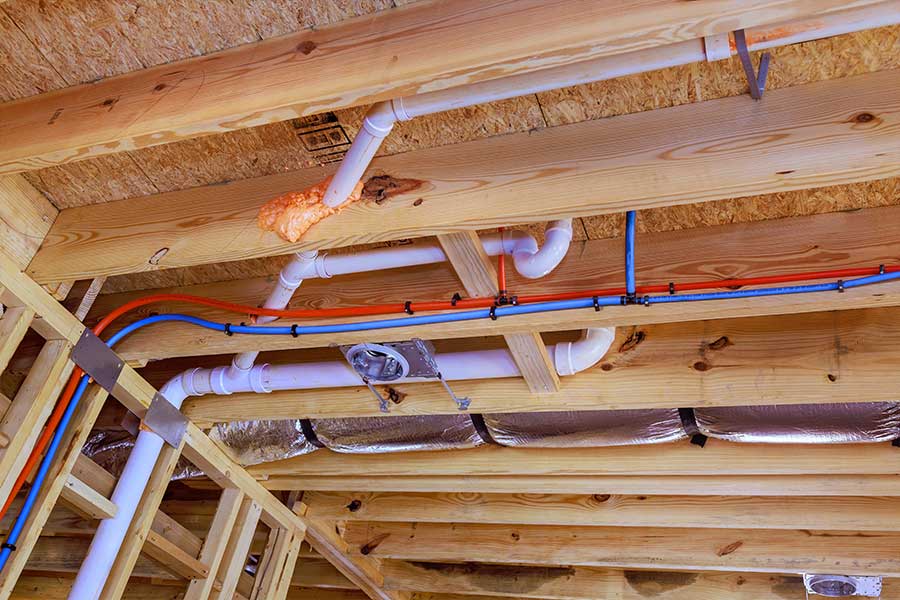
Home repiping restores water pressure in Spring, TX homes by replacing corroded, scale-lined pipes that choke flow before water reaches your fixtures. For homeowners in Gleannloch Farms, Harmony, and the Spring-Klein corridor, a full repipe is often the most effective long-term fix for weak pressure, discolored water, and recurring leaks.
New pipes restore water flow, improve system reliability, and end the cycle of repairs that older plumbing demands. This guide covers why home repiping becomes necessary, how it improves pressure and efficiency, which materials work best, and what the process looks like from start to finish.
Key Points
- Corrosion and mineral scale narrow older pipes, which is a common cause of low water pressure in aging Spring homes.
- Home repiping removes those restrictions at once and improves pressure at every fixture and appliance.
- PEX is the preferred material for most residential repiping in Spring; copper fits homes where longevity and water quality come first.
- Older galvanized steel lines can leach rust and sediment, and some older copper systems used lead-containing solder.
- A professional repipe starts with an inspection and ends with a pressure test and full-system check.
Why Is Home Repiping Necessary for Efficient Plumbing?
Home repiping becomes necessary when pipes reach the end of their functional lifespan. Many Spring homes built during the area’s rapid growth in the 1980s and 1990s now have pipes at that stage. Corrosion, scale buildup, and stress fractures build up gradually, and the system works harder to deliver less.
Aging pipes also raise health concerns. Older galvanized steel lines can leach rust and sediment into your water supply. Some older copper systems used lead-containing solder, which the EPA lists as a common source of lead in drinking water. Home repiping removes these hazards at the source. It is not a cosmetic upgrade. It is a foundational investment in the safety, comfort, and value of your home.
What Are the Signs Your Spring Home Needs Repiping?
The clearest signs your home needs repiping show up at the tap and in your repair history. Watch for these warning signs:
- Low Water Pressure: Weak flow at several fixtures at once usually points to narrowed pipes, not a single faulty faucet.
- Uneven Flow: Pressure drops when another fixture runs, which often means the supply lines can no longer carry enough volume.
- Discolored Water: Brown or rusty water typically signals corrosion inside galvanized pipes.
- Metallic Taste: A metallic taste often means the pipe material is breaking down into your water.
- Repeat Leaks: Leaks that keep showing up in new spots usually mean the whole system is failing, not one section.
- Visible Corrosion: Green, white, or rust-colored buildup on exposed pipes and fittings often reflects the condition of the pipes you cannot see.
If you notice two or more of these signs, book a professional plumbing inspection. Our licensed plumbers trace your pipe layout, explain what we find, and give you an upfront price before any work begins.
How Does Repiping Improve Water Pressure in Your Home?
Repiping improves water pressure by removing the restrictions inside your pipes. Pressure problems almost always come from what is happening inside the pipe, not at the fixture. Corrosion narrows the interior of older metal pipes over time and restricts flow just like a partial blockage.
Spring’s moderately hard water makes the problem worse. Mineral deposits gradually coat pipe walls and reduce how much water can move through the system at once.
New, properly sized pipes remove every one of those restrictions at the same time. Based on what we see in Spring properties, homes that get a full repipe see an immediate, noticeable improvement in pressure at showers, kitchen faucets, outdoor hose bibs, and appliances like washing machines and dishwashers. New piping also eliminates the micro-leaks older systems develop at joints and connections, which bleed pressure from the line before water reaches the fixture.
How Do Aging Pipes Hurt Plumbing Performance?
Aging pipes hurt plumbing performance slowly, which is why many homeowners adapt without recognizing the cause. A shower that once had strong pressure becomes tolerable. A faucet that fills a pot slowly becomes normal. These gradual changes hide a system that grows less efficient and more expensive to run.
Mineral scale and corrosion force water heaters, dishwashers, and washing machines to work harder to make up for restricted flow. That shortens equipment lifespan and drives up energy use. Frequent small repairs, fixture replacements, and constant low-pressure complaints are all downstream costs of a pipe system that should have been fixed at the source.
Should You Repair Your Pipes or Repipe the Whole Home?
A targeted pipe repair makes sense when the problem is isolated, such as one damaged section in an otherwise healthy system. Home repiping makes more sense when leaks keep returning in new places, pressure is weak throughout the house, or your water shows signs of corrosion. Patching one section of a failing system usually just moves the problem down the line.
Our plumbing repair team works with homeowners across Spring to decide whether targeted repairs or a full repipe is the better long-term value. We will tell you honestly which option fits your home, because we don’t apply temporary fixes.
What Is the Best Pipe Material for Home Repiping?
The best material for home repiping depends on your home’s construction, the local water chemistry, and your priorities. Each option has distinct strengths:
| Material | Strengths | Best For |
| PEX | Flexible, resists scale and chlorine, easy to route through existing walls, cost-effective | Most whole-home repiping projects in Spring |
| Copper | Exceptionally durable, corrosion-resistant, lifespan measured in decades | Homes where longevity and water quality come first |
| CPVC | Cost-effective rigid pipe for hot and cold water lines | Residential projects that call for a rigid option |
| Galvanized steel | Prone to rust and interior scaling over time | Rarely specified in new repiping projects |
PEX is the preferred material for most residential repiping projects in Spring because of its flexibility, durability in both high-heat and freeze conditions, and lower installation cost. Copper remains the go-to where longevity and water quality matter most. Bear’s Plumbing is an Uponor brand partner, and our licensed plumbers match every whole-home repiping project to your home’s specific conditions.
What Happens During the Repiping Process in Spring, TX?
A professional repiping project in Spring, TX follows a clear process designed to limit disruption to your home:
- Inspection: A licensed technician traces your current pipe layout and identifies the scope of replacement.
- Plan and Upfront Price: We walk you through the plan and the price before any work begins, so there are no surprises.
- Pipe Replacement: Technicians work methodically through your home’s pipe runs and keep work areas clean.
- Restoration: We restore access points after the new lines are installed.
- Testing: A final pressure test and full-system inspection confirm everything works before we close out the job.
Home repiping covers the water lines inside your house. If your home also shows signs of a failing supply line outside the interior system, our main water line repair services handle that part of the system as well.

Frequently Asked Questions About Home Repiping
Will home repiping fix low water pressure in my Spring home?
Home repiping fixes low water pressure when the cause is corrosion or mineral scale inside your pipes, which is common in older Spring homes. New, properly sized pipes remove those restrictions, so pressure improves at every fixture. If the cause sits outside the house, such as a damaged main water line, that part of the system needs its own repair.
How do I know if I need a repipe or just a pipe repair?
You likely need a full repipe if leaks keep showing up in different places, pressure is weak throughout the house, or your water looks rusty or tastes metallic. A single damaged section in an otherwise healthy system usually only needs a repair. A licensed plumber can inspect the system and tell you which option gives you better long-term value.
What pipe material is best for repiping a house in Spring, TX?
PEX is the preferred material for most residential repiping projects in Spring, TX. It resists scale and chlorine, holds up in both high heat and freezing conditions, routes easily through existing walls, and costs less to install. Copper is a strong choice when longevity and water quality are your top priorities. Galvanized steel is rarely used in new repiping projects.
Is old plumbing a health risk?
Old plumbing can be a health risk. Older galvanized steel pipes can leach rust and sediment into your drinking water, and some older copper systems used lead-containing solder. Home repiping removes these materials from your water supply at the source, which makes it a long-term investment in your family’s safety and your home’s value.
Ready for Stronger Water Pressure? Schedule a Home Repiping Assessment
Home repiping is not a reactive repair. It is a proactive investment that removes the root cause of recurring plumbing problems and restores your water system to the performance it was designed to deliver. For Spring homeowners living with low pressure, frequent repairs, or water quality concerns, repiping delivers lasting results no short-term fix can match.
Bear’s Plumbing has served the Spring-Klein community since 2005 as a local, family-owned team licensed under Texas RMPL36236. You get upfront pricing, on-time service, and workmanship guaranteed. Call the office or contact our team today to schedule a home repiping assessment, and we will tell you honestly whether a repipe is the right solution for your property.